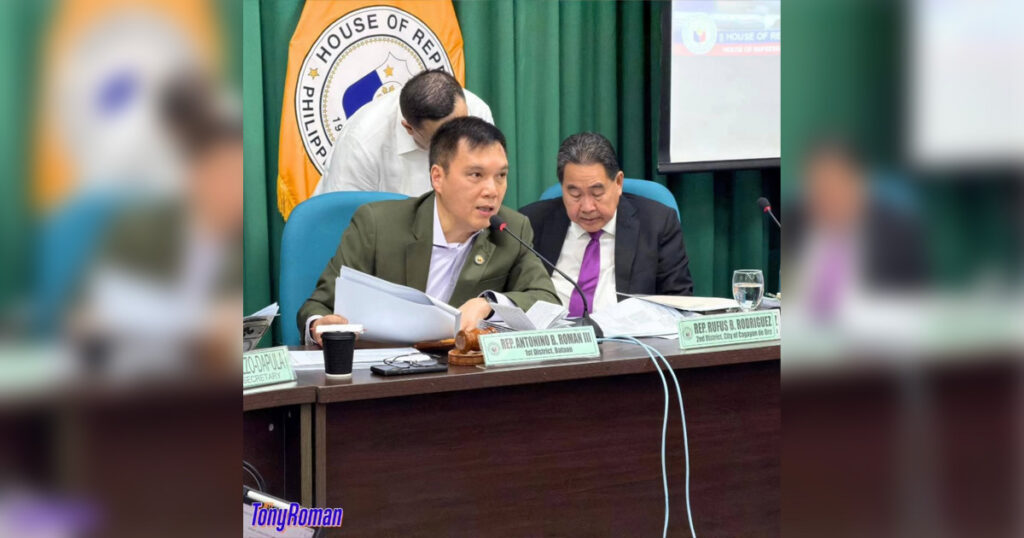
Bataan 1st District Rep. Antonino Roman III is advocating for the establishment of Global Education Centers (GECs) in the country, positioning the proposal as a step toward widening educational opportunities and addressing long-standing gaps in the Philippine education system. Speaking during discussions at the House Committee on Higher and Technical Education, Roman emphasized that the initiative is meant to complement—not replace—existing local higher education institutions (HEIs).
Rep. Roman underscored that while many Philippine HEIs continue to improve, certain specialized programs and global learning experiences remain limited locally. He said GECs could allow Filipino students to access international-quality education without leaving the country, particularly in fields not currently offered by local institutions. The lawmaker stressed that participation in GECs would be voluntary, ensuring that students retain the freedom to choose between local and international academic pathways.
Addressing concerns over possible displacement of local schools, Cong. Roman described such fears as “more intuitive than real,” noting that the presence of foreign education providers could instead encourage innovation and raise standards across the sector. He also pointed out that the initiative could benefit students who lack the resources to study abroad, as GECs may open doors to similar opportunities within the Philippines.
The Bataan lawmaker further highlighted the importance of making the program inclusive through scholarships and incentives. He said collaboration among government, industry, and international academic institutions would be key to ensuring that access to global education is not limited to affluent families but extended to a broader segment of society.
Cong. Roman maintained that opening the country to foreign participation in education marks a shift from a traditionally protectionist stance. While acknowledging that no policy is perfect at the outset, he said exploring new approaches like GECs is necessary to respond to the country’s evolving education needs and to better equip Filipino students for a more interconnected world.

 01
01
 02
02
 03
03
 04
04
 05
05


