BALANGA CITY, Bataan – The Department of Environment and Natural Resources (DENR) is pursuing the National Greening Program (NGP) to confront calamities and ensure sustainable livelihood revenue for fisher folks and upland farmers in the province.
Raymond A. Rivera, officer-in-charge of the Provincial Environment and Natural Resources Office (PENRO) here identified the two NGP projects as mangrove protection in the coastal towns and bamboo planting in the upland villages of Bataan.
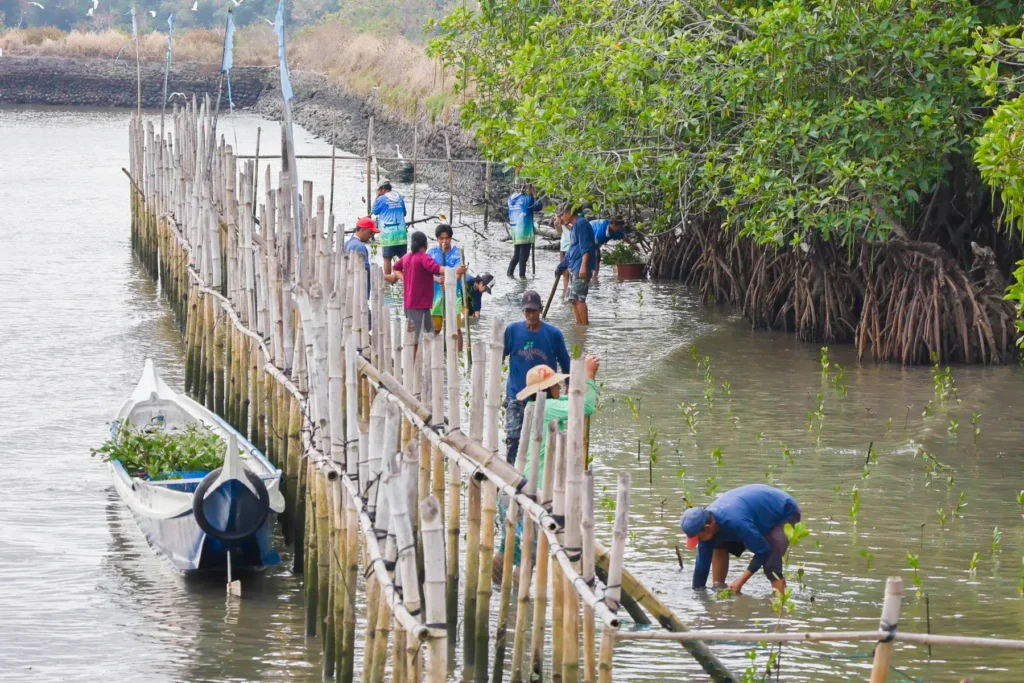
Rivera, formerly assigned as CENRO in Masinloc town in Zambales, said about 400 hectares of mangrove areas in the municipalities of Orani, Samal, Abucay, Pilar, Orion and Balanga City are being preserved to protect fish habitat and other aquatic marine resources.
While bamboo plantation projects estimated at 720 hectares are located in the upland villages of Morong, Mariveles, Bagac, Limay, Abucay and Pilar towns, Rivera said.
The newly-designated DENR officer-in-charge in Bataan explained the NGP is a massive rehabilitation program of the government established by virtue of Executive Order No. 26 targeted to plant 1.5 billion trees in 1.5 million hectares nationwide within a period of six years.
Aside from being a reforestation initiative, the NGP is also seen as a climate change mitigation strategy as it seeks to enhance the country’s forest stock to absorb carbon dioxide, which is largely blamed for global warming.
It is also designed to reduce poverty, providing alternative livelihood activities for marginalized upland and lowland households relating to seedling production and care and maintenance of newly-planted trees, Rivera described the national government projects.
As a convergence initiative among the Departments of Agriculture, Agrarian Reform and DENR, half of the targeted trees to be planted under the program would constitute forest tree species intended for timber production and protection as well. The other 50% would comprise of agroforestry species.
Rivera added that areas eligible for rehabilitation under the program include all lands of public domain. Specifically, these include forestlands, mangrove and protected areas, ancestral domains, civil and military reservation, urban greening areas, inactive and abandoned mine sites and other suitable lands.






 01
01

 02
02
 03
03
 04
04
 05
05

